
Why Some Consultations Go Wrong Before the Patient Enters the Clinic
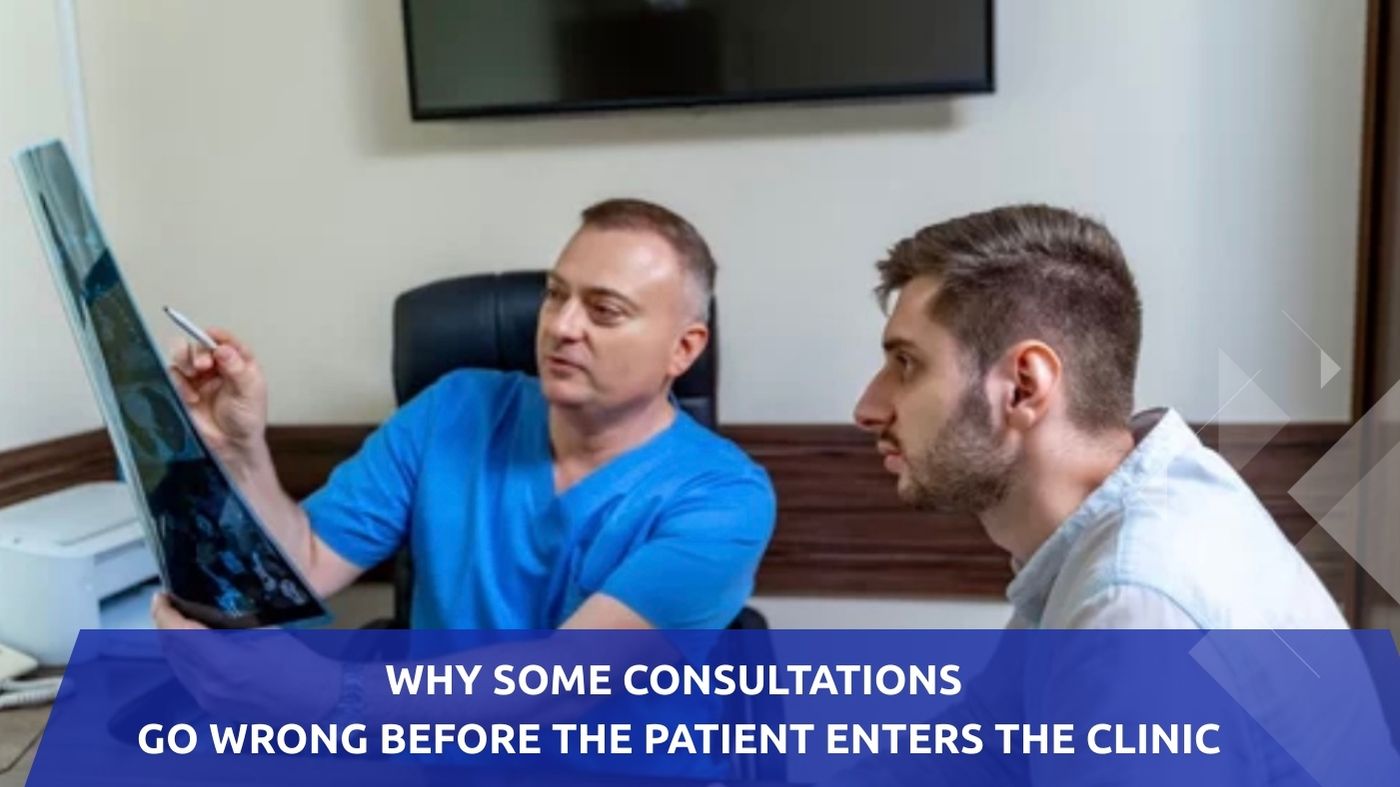
In almost every clinic , consultants encounter the same quiet challenge: a consultation that stumbles before it even begins. The room is calm, the schedule is tight, the patient seems prepared. And yet, within the first moments, it becomes clear that the foundation you need simply isn’t there.
Patients arrive without a structured medical story. They try to recall their history on the spot, often beginning somewhere in the middle rather than at the beginning, and the narrative unfolds in fragments. Previous operations are mentioned in passing, chronic conditions surface only when specifically asked, and red-flag symptoms may not be recognised as relevant. What should be a focused clinical discussion often starts as a reconstruction exercise, one that consumes the first several minutes of the appointment.
This is not due to lack of intelligence or interest on the patient’s part. It is simply human nature. Patients think in feelings and experiences: “My knee hurts,” “My ankle swells at night,” “I can’t comfortably go up stairs anymore.” But consultants think in timelines, mechanisms, and pattern recognition. For the clinical picture to become clear, the story needs structure , and spontaneity rarely delivers that.
As a result, many consultations begin from a place of ambiguity. The consultant must gently guide the patient backwards: When did this start? How did it begin? Did something specific trigger it? How has it progressed? What makes it better or worse? These essential details, when gathered under time pressure, can stretch the early part of the consultation and compress everything that follows.
And what follows is not surprising. A typical consultation has to encompass a full history, a targeted examination, review or ordering of imaging, explanation of findings, a discussion of both conservative and surgical options, expectations, risks, benefits, lifestyle considerations, and next steps ,all while maintaining professionalism, calmness, empathy, and clarity. When half of that limited window is spent organizing a story that could have been articulated earlier, both consultant and patient feel the consequences. The conversation becomes reactive rather than intentional. The clinical strategy becomes squeezed. The educational moments shrink. And the patient’s confidence in their understanding can diminish.
Yet this is not the patient’s fault. Most people do not know which details matter most. They aren’t aware of what is clinically relevant, which prior treatments influence the diagnosis, or how important chronology is for orthopaedic decision-making. Even highly educated patients, when stressed or uncomfortable, find it difficult to recall their entire medical history accurately in real time. Expecting them to deliver a structured narrative without preparation is simply unrealistic.
One of the most effective ways to prevent consultations from derailing early is to build a simple, predictable preparation process around your clinic. Many consultants find it helpful to offer patients a brief set of questions to complete before the appointment ,sent by email, WhatsApp, or even printed for in-clinic completion. Others use a short written prompt asking patients to note when the problem began, what triggered it, and how it has changed over time.
Secretaries can also play a vital role by reminding patients to bring previous imaging, operative reports, and medication lists, reducing last-minute surprises. In some clinics, reception staff ask patients to note down their main concerns while they wait, which helps focus the discussion later.
This leads to a simple but important question: How many consultations go wrong not because of clinical complexity, but because the story wasn’t clear at the very start?
It’s a question worth asking in every subspecialty, and one that sits at the centre of modern private practice. In a world where patient expectations are rising, clinic time is tight, and the accuracy of early information is critical, the consultations that succeed are the ones built on solid, structured beginnings.